
#Should You Choose a Deep Foundation for Your House Construction?
**Summary:**
A deep foundation reaches soil layers deep below the surface to support a house. It is used when the topsoil is weak or the building is heavy. In house construction, choosing a deep foundation can prevent settling, provide stability, and allow safer building on challenging ground.
## What Is a Deep Foundation in House Construction?
### How Deep Foundations Work
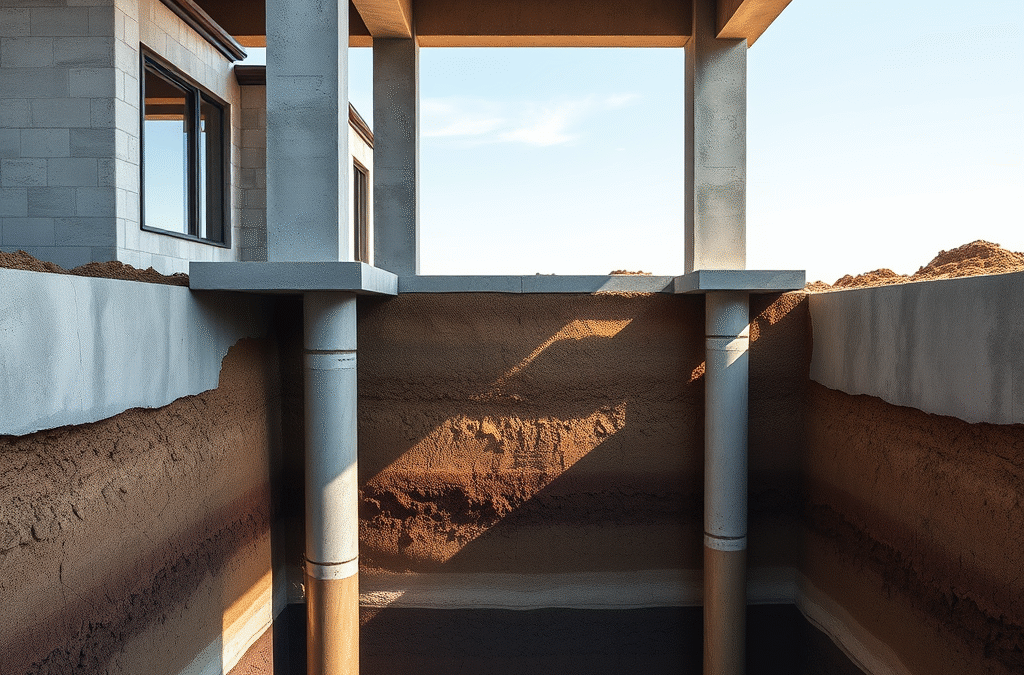
A deep foundation transfers the weight of a house to strong soil far below ground level. It bypasses weak surface layers. This method keeps the structure steady even when the upper soil cannot hold the load.
### Types of Deep Foundations
– **Driven piles:** Steel or concrete tubes hammered into the ground.
– **Bored piles:** Holes drilled and filled with reinforced concrete.
– **Caissons:** Large watertight boxes sunk into place.
– **Mini‑piles:** Small diameter piles used when space is limited.
## When Is a Deep Foundation Needed in House Construction?
### Soil Conditions That Require Deep Foundations
– Soft clay or loose sand near the surface.
– High water tables that saturate shallow soil.
– Expansive soils that swell and shrink with moisture.
### Load Requirements and Building Height
Tall houses or those with heavy roof loads need deeper support. Deep foundations spread the load over a larger area, reducing pressure on the ground.
## Benefits of Using a Deep Foundation in House Construction
### Stability on Difficult Soil
Deep foundations anchor the house to firmer layers below. This prevents shifting when the surface soil moves.
### Reduced Risk of Settlement
By reaching stable strata, the house avoids sinking over time. This protects walls, floors, and finishes.
### Ability to Support Heavy Structures
Large decks, multiple stories, or heavy equipment can be safely carried by deep piles.
## Drawbacks and Considerations
### Higher Costs
Materials, drilling rigs, and skilled labor increase the price of deep foundations compared to shallow options.
### Longer Construction Time
Installing piles takes more days than pouring a simple footing. Weather can also delay work.
### Need for Specialized Equipment
Pile drivers, drilling rigs, and cranes are required. Access to the site may be limited in urban areas.
## Common Deep Foundation Types Used in House Construction
### Driven Piles
Prefabricated steel or concrete piles are driven quickly. They work well in sand, gravel, or stiff clay.
### Bored Piles
A hole is bored, then filled with concrete. This method reduces vibration and is suited for noisy neighborhoods.
### Caissons
Large prefabricated boxes are sunk into place. Caissons are useful when deep water tables require watertight operation.
### Mini‑Piles
Small-diameter piles are installed with lightweight equipment. They are ideal for retrofits or tight sites.
## Design Steps for a Deep Foundation in House Construction
### Site Investigation and Soil Testing
Geotechnical engineers drill test holes and collect samples. Results reveal soil strength, depth, and water level.
### Load Calculation
Engineers sum all vertical loads from walls, roofs, and interior finishes. They add a safety margin before designing pile size and spacing.
### Selecting the Right Foundation Type
Based on soil data, engineers choose driven, bored, or caisson piles. Mini‑piles may be added for extra support.
### Working with Engineers and Contractors
Clear communication ensures the design matches the house plan. Contractors follow precise installation procedures to avoid errors.
## Installation Process Overview
### Preparing the Site
Vegetation is cleared, and access roads are built. Staking marks where piles will go.
### Driving or Drilling Piles
Heavy rigs lower piles to the required depth. In bored piles, a drilling bit creates a smooth hole.
### Capping and Connecting
A concrete cap ties multiple piles together. It provides a flat surface for the superstructure to rest on.
## Cost Factors in House Construction Using Deep Foundations
### Material Costs
Piles made of steel, concrete, or timber vary in price. Reinforcement bars add to the expense.
### Labor and Equipment
Skilled operators run drilling rigs. Specialized crews handle pile placement and capping.
### Geotechnical Reports
Professional soil studies are essential. Accurate reports prevent costly redesigns later.
## Alternatives to Deep Foundations in House Construction
### Slab‑on‑GradeA concrete slab rests directly on prepared soil. It works when the ground is level and strong.
### Shallow Foundations
Spread footings and strip footings sit near the surface. They are cheaper but only suitable for stable soils.
### Spread Footings
Broad bases distribute loads over a larger area. They are common for low‑rise houses on firm ground.
## Frequently Asked Questions
### Is a deep foundation always necessary for a house?
No. It is only needed when soil or load conditions require extra depth.
### How deep should piles be installed in house construction?
Depth depends on soil testing results and building load. It is typically 10 to 30 meters, but can be deeper.
### Can I retrofit a house with a deep foundation?
Yes, but it requires extensive excavation and structural modifications. It is a major project.
### What is the difference between driven and bored piles?
Driven piles are hammered in, while bored piles are installed after drilling a hole.
### How long does deep foundation installation take?
It can take weeks to months, depending on site conditions and pile length.
### Are deep foundations suitable for flood‑prone areas? They can be, but additional waterproofing measures are required to protect the structure.
### How do I know if my house design needs a deep foundation?
A geotechnical engineer evaluates soil and load data to make that recommendation.
### What maintenance does a deep foundation require?
Periodic inspections for cracks or settlement are recommended, especially after severe weather.
### Can I save money by choosing shallow foundations instead?
Sometimes, but only if the soil is strong enough and the building is lightweight.
### Are there environmental impacts of installing deep foundations?
Drilling can disturb habitats and generate noise. However, modern methods aim to minimize impact.
### How do I choose a contractor for deep foundation work?
Look for experience, proper licensing, and references from previous house construction projects.